Advanced Training in Robotic Breast Surgery & Whole Breast Reconstruction
Robotic Breast Surgery & Whole Breast Reconstruction Cadaveric Workshop
A continued commitment to advanced, minimally invasive and organ-preserving cancer surgery.
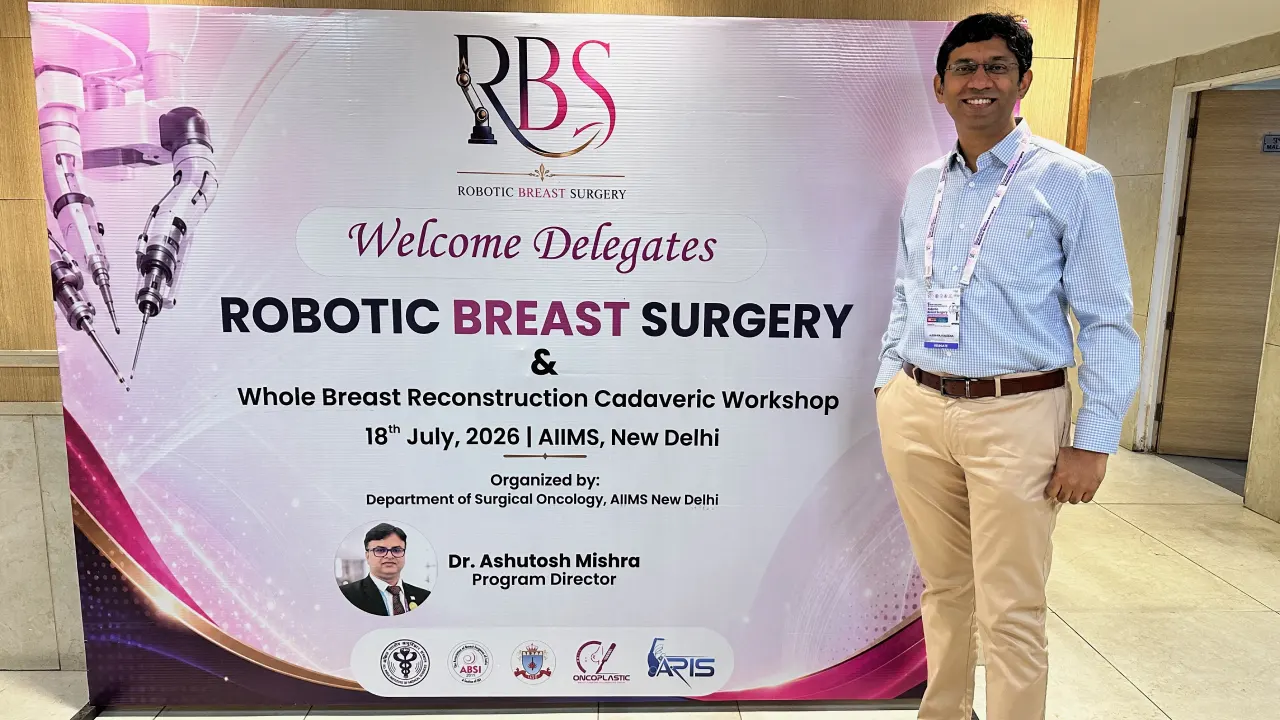
As part of my continued commitment to advanced, minimally invasive and organ-preserving cancer surgery, I participated in the Robotic Breast Surgery & Whole Breast Reconstruction Cadaveric Workshop at the Department of Surgical Oncology, AIIMS New Delhi.
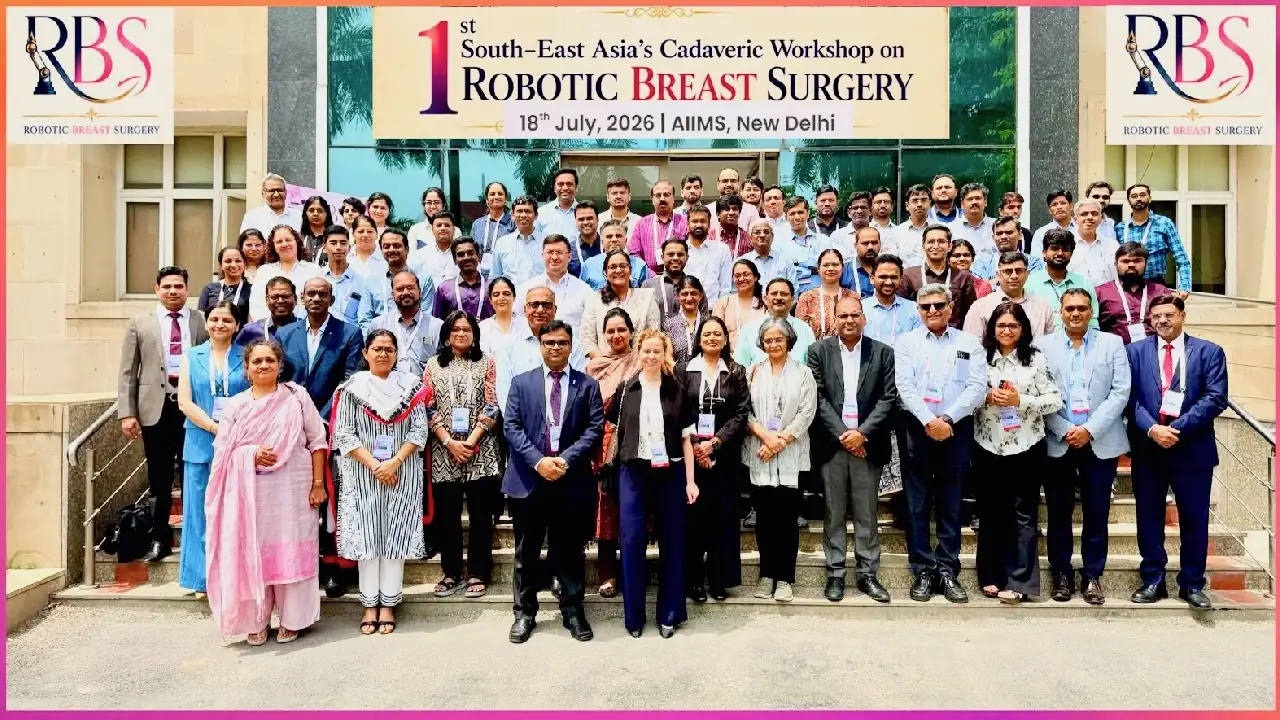
The workshop formed part of the 1st South-East Asia Cadaveric Workshop on Robotic Breast Surgery, bringing together academic discussions and hands-on cadaveric training focused on robotic breast surgery and whole-breast reconstruction.
Breast cancer surgery has evolved significantly, moving beyond cancer removal alone towards approaches that combine oncological safety with preservation of form, function and quality of life. This evolving spectrum includes breast conservation, oncoplastic surgery, skin-sparing and nipple-sparing mastectomy, sentinel lymph-node biopsy, targeted axillary surgery, immediate reconstruction and minimally invasive approaches.
01 Breast-conserving surgery
02 Oncoplastic breast surgery
03 Skin-sparing and nipple-sparing mastectomy
04 Sentinel lymph-node biopsy
05 Targeted axillary surgery
06 Immediate breast reconstruction
07 Minimally invasive and emerging robotic approaches
Robotic breast surgery represents one of the newer developments within this evolving spectrum.
Robotic breast surgery uses magnified three-dimensional vision and articulated instruments to support enhanced dexterity within confined anatomical spaces. The approach may involve strategically positioned incisions and requires careful consideration of patient selection, tumour characteristics, oncological principles, breast anatomy and reconstructive requirements.
As with any developing technique, the technology is considered within the wider context of breast cancer surgery. The objective is to understand where robotic assistance may support a carefully planned operation while maintaining the principles of safe cancer surgery.
“Technology should support good cancer surgery—not determine it.”
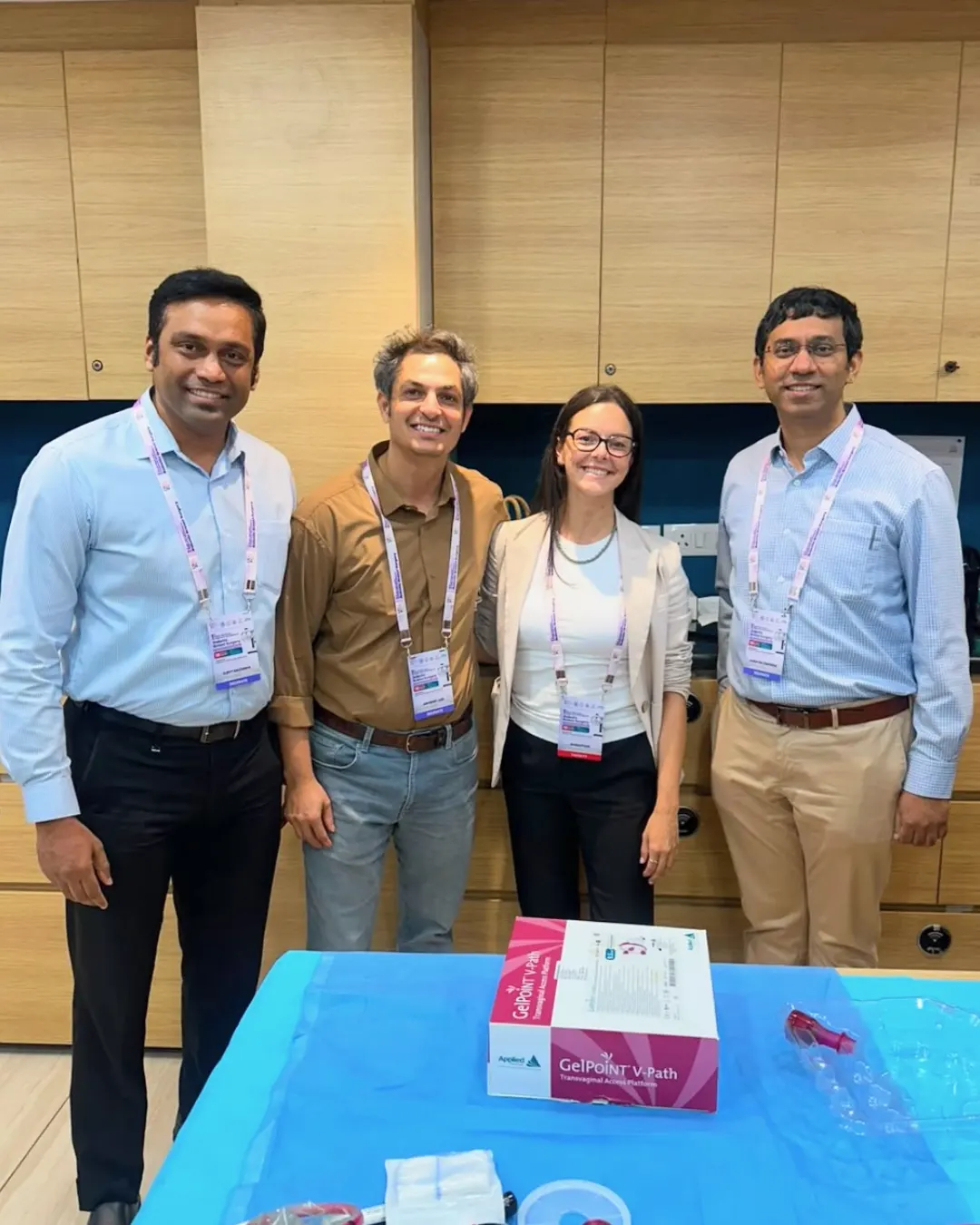
Structured cadaveric training provides an opportunity to study anatomy, surgical access and technical steps in a controlled educational environment. It allows the surgeon to examine anatomical planes, practise operative techniques and consider how these principles may translate into clinical application.
The workshop included practical exposure to robotic breast surgery and whole-breast reconstruction, with discussion of the relationship between access, anatomy, oncological intent and reconstructive requirements.
Learning alongside experienced faculty created space for questions, observation, repetition and critical discussion—an important part of continuous professional development in advanced surgery.
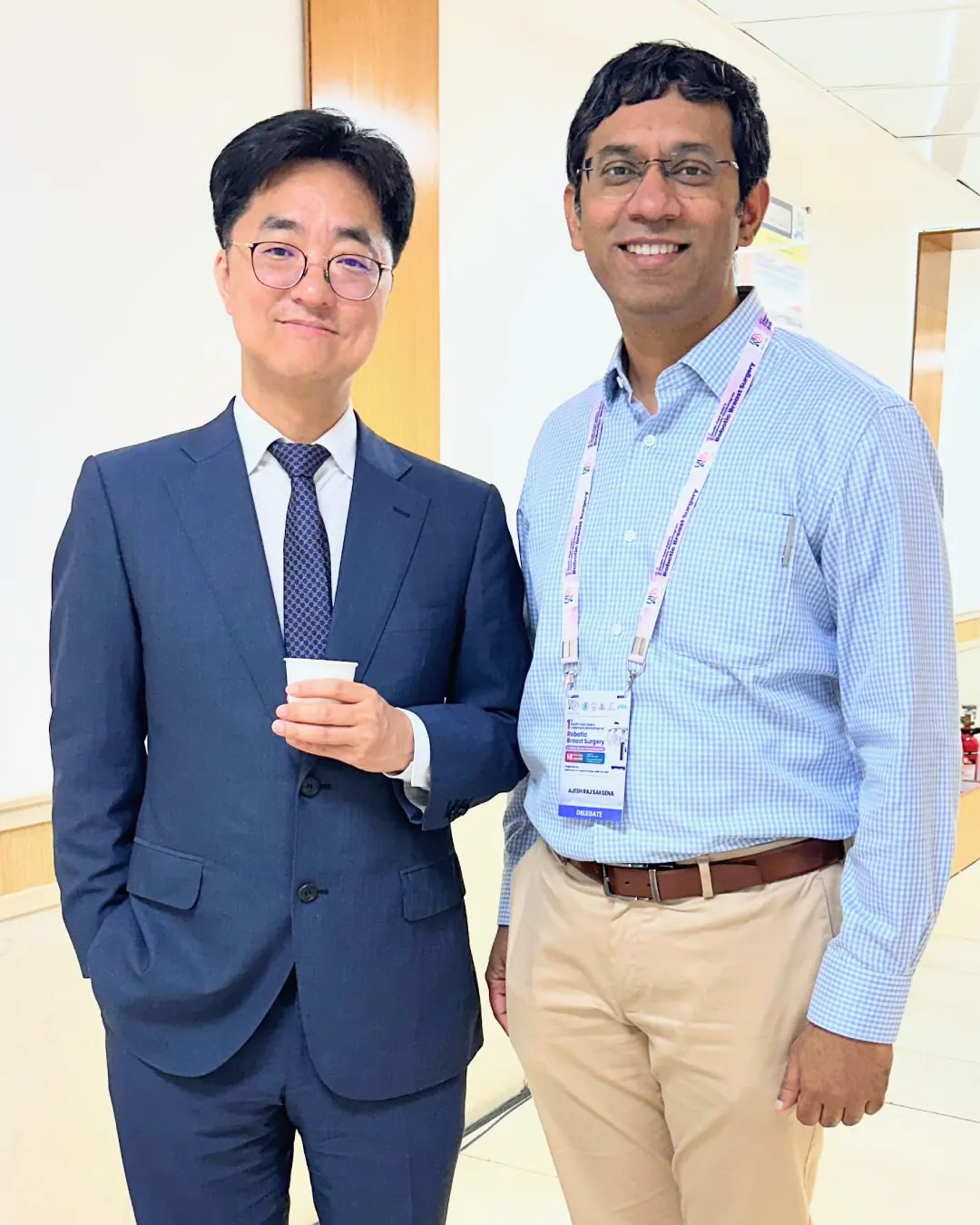
The workshop provided the opportunity to learn from renowned international and national faculty, with academic discussions and hands-on teaching centred on robotic breast surgery, whole-breast reconstruction and the continued development of surgical technique.
Programme Director
Dr. Ashutosh Mishra
Associate Professor of Surgical Oncology, AIIMS New Delhi
Global Expertise. Hands-on Training. Advancing Breast Cancer Surgery.
Cancer control
Breast preservation
Body image
Function
Reconstruction
Quality of life
Cancer control and preservation are not competing ideas. They are part of the same patient-centred conversation.
Modern breast cancer surgery considers the individual patient beyond the removal of the tumour. Breast preservation, body image, function and reconstruction all form part of the wider treatment journey.
Whole-breast reconstruction and oncoplastic principles reflect the importance of restoring form while keeping oncological safety at the centre of decision-making. The right approach remains dependent on the patient, the disease and the clinical context.
Advanced surgical training is not only about learning a new device or technique. It involves understanding anatomy, mastering established oncological principles, structured hands-on training, critically evaluating newer techniques and asking whether they offer genuine benefit to the patient.
Continuous professional development supports a thoughtful approach to breast cancer surgery and the choices that surround breast conservation, reconstruction, minimally invasive surgery and robotic cancer surgery.
01 Breast cancer surgery
02 Breast conservation
03 Oncoplastic breast surgery
04 Breast reconstruction
05 Sentinel lymph-node surgery
06 Minimally invasive surgery
07 Robotic cancer surgery
“The objective remains simple: to select the right operation for the right patient while maintaining oncological safety as the first priority.”
The journey towards precision and personalised cancer surgery is continuous. It brings together careful patient selection, established oncological principles, minimally invasive thinking, organ preservation and an understanding of where technology may support the operation.
Participation in the Robotic Breast Surgery & Whole Breast Reconstruction Cadaveric Workshop at AIIMS New Delhi represents another step in this ongoing commitment to advanced surgical training and the thoughtful application of robotic breast surgery.
Precision
Minimal invasiveness
Organ preservation
Personalised treatment
Training Journey
The Workshop, Documented