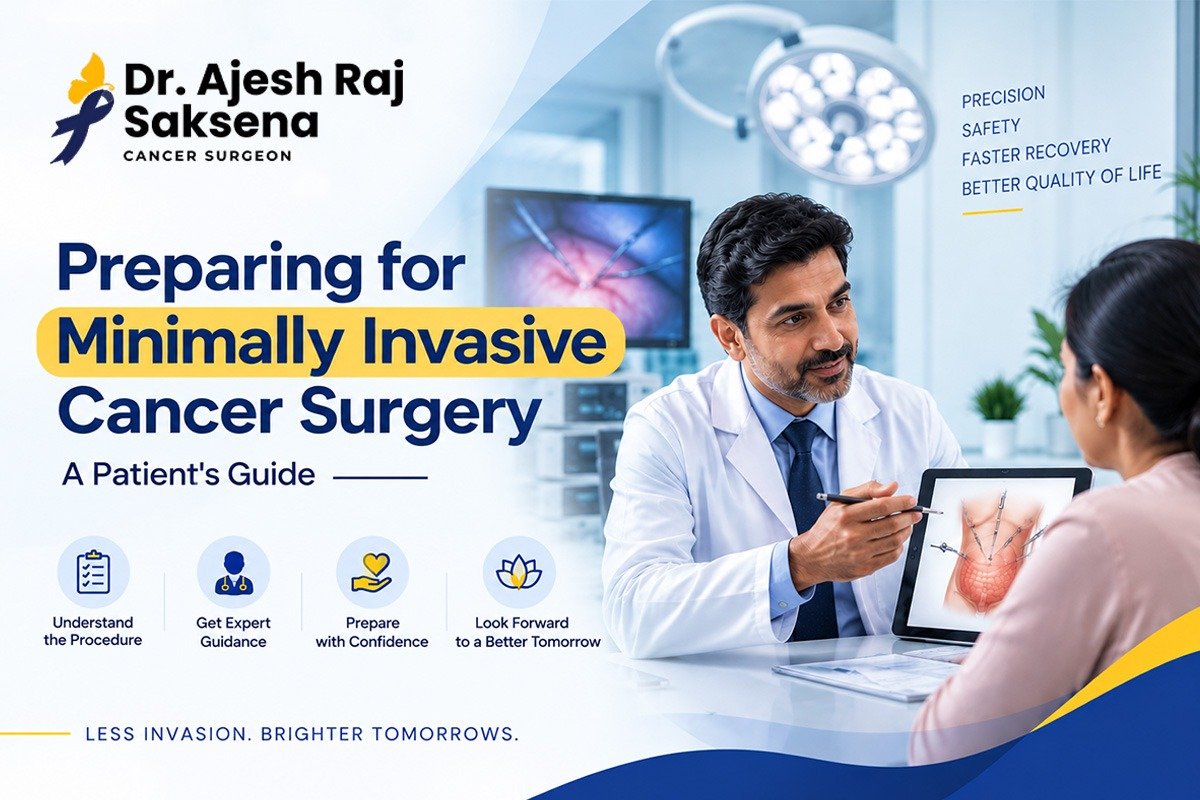
Preparing for Minimally Invasive Cancer Surgery: A Patient’s Guide
By Dr Ajesh Raj Saksena, Senior Consultant Surgical Oncologist, Apollo Cancer Centres, Jubilee Hills, Hyderabad
Being advised to undergo cancer surgery raises many questions. Will the cancer be removed completely? Is keyhole surgery safe? How painful is recovery? How long will I stay in hospital? When can I return to my normal routine?
These concerns are completely understandable.
As a laparoscopic cancer surgeon in hyderabad at Apollo Cancer Centre., I often meet patients who are relieved to learn that their operation can be performed laparoscopically or robotically, yet remain unsure how to prepare for it.
Preparing for surgery involves far more than completing investigations and arriving on the scheduled date. A well-prepared patient understands the purpose of the operation, knows what to expect during recovery, and takes an active part in treatment decisions.
Good preparation cannot remove every risk that comes with major cancer surgery. But it does help us identify and correct several factors that influence healing and recovery — often before you ever reach the operating theatre.
Minimally Invasive Does Not Mean Minor Surgery
Minimally invasive cancer surgery is performed through a few small incisions rather than one long one.
In laparoscopic surgery, the surgeon works through small ports placed in the abdomen or chest, using a camera and specialised instruments. In robotic-assisted surgery, the surgeon controls highly precise instruments from a console while viewing the operative field in magnified three-dimensional detail. The robot does not operate on its own — the surgeon directs every movement.
For carefully selected patients, laparoscopic or robotic surgery can offer real advantages:
- Smaller incisions
- Less discomfort after surgery
- Reduced blood loss in many procedures
- Earlier movement after surgery
- A shorter hospital stay in selected patients
- A faster return to routine activities
Even so, the operation carried out inside the body may still be extensive and technically demanding.
In cancer surgery, the goal is never simply to remove a visible lump. The tumour must be removed with adequate margins, the relevant lymph nodes may need to be addressed, and nearby organs, nerves and major blood vessels must be preserved wherever it is oncologically safe to do so.
Incision size must never compromise cancer clearance. If an open operation offers a safer or more complete procedure in a particular situation, it may well be the better choice.
You can read more about the indications, benefits and limitations of laparoscopic and robotic cancer surgery in Hyderabad on the respective treatment pages of this website.
Understand Your Diagnosis and Treatment Plan
Before surgery, you should clearly understand your diagnosis, the purpose of the operation, and how surgery fits into your overall cancer treatment.
Cancer care usually draws on several specialists. Depending on the type and stage of cancer, surgery may be preceded or followed by chemotherapy, radiation therapy, targeted therapy or immunotherapy.
Ideally, a multidisciplinary tumour board plans this sequence together.
During your consultation, consider asking:
- What is the exact diagnosis and stage of my cancer?
- What is the aim of the proposed surgery?
- Can the operation be performed laparoscopically or robotically?
- Why is this approach suitable for me?
- Is there a possibility of converting to open surgery?
- Will lymph nodes or neighbouring organs need to be removed?
- Might I need a temporary or permanent stoma?
- How long am I likely to stay in hospital?
- What help will I need after discharge?
- When will the final biopsy report be available?
- Will I need further cancer treatment after surgery?
No question is unnecessary when you are trying to understand your treatment. If a medical term is unclear, ask your doctor to explain it again in simpler language.
Complete the Required Preoperative Evaluation
The tests needed before cancer surgery depend on the planned procedure, your age, previous treatments and overall health.
You may need blood tests, cardiac and respiratory assessment, imaging, an anaesthesia evaluation, or a consultation with another specialist.
Additional assessment may be necessary if you have diabetes, hypertension, heart disease, lung disease, kidney problems, or a history of chemotherapy or radiotherapy.
Tell your surgical team about:
- Previous operations
- Allergies
- Heart or lung conditions
- Diabetes or hypertension
- Previous chemotherapy or radiotherapy
- A history of excessive bleeding or blood clots
- Sleep apnoea
- Previous problems with anaesthesia
- Any recent fever, cough, infection or breathing difficulty
Please do not hide a medical problem for fear that surgery may be postponed. Finding and managing a problem before surgery is always safer than discovering it during or after the operation.
Review Every Medicine and Supplement
Bring an accurate list of everything you take regularly — prescribed medicines, over-the-counter tablets, vitamins, herbal preparations, traditional remedies, and fitness or nutritional supplements.
Some may need to be temporarily stopped or adjusted, particularly:
- Blood thinners and antiplatelet medicines
- Diabetes medicines and insulin
- Certain blood-pressure medicines
- Steroids
- Hormonal medication
- Herbal products that may affect bleeding or anaesthesia
Never stop a blood thinner or another essential medicine on your own.Stopping some medicines too early can be just as dangerous as continuing others. Your surgeon and anaesthetist will give you clear instructions about what to continue, what to withhold, and what to take on the morning of surgery.
Improve Your Strength Before Surgery
Don’t think of the time before an operation as empty waiting. It is a valuable window in which to improve your body’s readiness for treatment — a process often called prehabilitation.
Pay attention to nutrition. Cancer, poor appetite and previous treatment can all lead to weight and muscle loss. A person can look a normal weight while still having inadequate muscle reserves. Unless you have been told to follow dietary restrictions, aim for adequate protein and calories.
Depending on your preferences and condition, good protein sources include eggs, milk products, pulses, lentils, soy, fish and chicken.
Tell your team if you have:
- Unintentional weight loss
- Poor appetite
- Difficulty swallowing
- Persistent vomiting or diarrhoea
- An inability to eat normal meals
Some patients benefit from nutritional supplements or temporary feeding support before major surgery. This is a medical step to improve recovery — not a sign of weakness.
Stay physically active.
Unless your doctor advises otherwise, continue gentle activity such as walking. Breathing exercises and light strengthening may also be recommended. The aim is not an intense fitness programme just before surgery, but to preserve stamina, muscle strength and confidence — so that sitting up, breathing deeply and walking after surgery come more easily.
Stop smoking and limit alcohol.
Smoking reduces oxygen delivery to tissues and increases respiratory and wound-related complications. Stopping before surgery helps even if you have smoked for many years. Tell your anaesthetist honestly about tobacco, alcohol and any other substance use — this helps the team plan safer anaesthesia and postoperative care.
Control diabetes and other conditions.
Poorly controlled blood sugar raises the risk of infection and delayed healing. Anaemia, hypertension, thyroid problems and heart or lung conditions should also be optimised where possible. Occasionally a short delay to correct a significant problem can make the eventual operation safer — a decision always balanced against the urgency of treating the cancer.
Follow Only the Instructions Given for Your Operation
Not every cancer operation needs the same preparation.
Some bowel procedures require a special diet, laxative preparation or antibiotics; others need no bowel preparation at all. Fasting instructions also vary with the procedure, the anaesthesia plan and hospital protocol.
Follow the instructions from your own surgical team — not advice from friends, social media, or someone who had a different operation.
If you may need a stoma, meeting a stoma-care nurse before surgery can be very helpful. The nurse can explain how a stoma works, mark a suitable position on your abdomen, and answer practical questions about food, clothing, travel and everyday life.
Prepare Yourself and Your Family
Anxiety before cancer surgery is normal. Patients may worry about pain, the final biopsy report, changes in body image, loss of independence, or the possibility of further treatment.
Talk about these concerns openly with your surgeon and family. If anxiety is significantly affecting your sleep, appetite or daily life, professional counselling can help.
It also helps to plan the practical side of recovery:
- Identify the family member who will coordinate your care
- Arrange transport to and from hospital
- Keep reports, scans and medication lists together
- Arrange help at home for the first few days
- Plan support for children or elderly dependants
- Keep frequently used items within easy reach at home
- Pack loose, comfortable clothing and suitable footwear
Your Pre-Surgery Checklist
Before admission, confirm that you have:
- Completed the advised investigations and anaesthesia evaluation
- Shared your complete medical history
- Provided a list of all medicines and supplements
- Asked specifically about blood thinners and diabetes medicines
- Followed the prescribed nutrition plan
- Continued safe physical activity and breathing exercises
- Stopped smoking and limited alcohol
- Understood the fasting or bowel-preparation instructions
- Arranged a caregiver and transport home
- Packed your reports, scans, identification and insurance documents
- Saved the hospital or surgical team’s emergency contact number
What Happens on the Day of Surgery?
On the day of surgery, the team will verify your identity, the planned procedure, consent, allergies and test results. The surgeon and anaesthetist may review the plan with you again.
You may receive preventive antibiotics and measures to reduce the risk of blood clots, and the surgical site may be marked when relevant.
Don’t be concerned if different team members ask you the same questions more than once. These repeated checks are deliberate safety measures.
Recovery Begins Soon After Surgery
Modern enhanced-recovery protocols encourage patients to resume normal activity as safely and as early as possible. Depending on your condition and the procedure, you may be encouraged to:
- Sit up and get out of bed
- Perform breathing exercises
- Walk short distances with assistance
- Begin liquids or food when appropriate
- Use a combination of pain-control methods
Have urinary catheters and intravenous lines removed once it is safe
Early movement improves circulation, helps the lungs expand, reduces the risk of blood clots and supports the return of bowel function.
Pain should be controlled well enough for you to breathe deeply, sleep and walk. Complete absence of discomfort is not always realistic after major surgery — but severe or uncontrolled pain should always be reported.
Recovery Continues After Discharge
Leaving hospital does not mean healing is complete. Tiredness, reduced appetite and swings in energy are common after major cancer surgery.
Recovery varies with the operation, your age, physical fitness, nutrition, previous treatment, and whether any complications occur.
Follow the instructions you are given about wound care, diet, walking, lifting, bathing, driving, returning to work, stoma or drain care, blood-thinning injections and follow-up appointments.
Contact your treating team if you develop:
- Persistent fever
- Increasing abdominal or chest pain
- Repeated vomiting
- Breathing difficulty
- Increasing wound redness or discharge
- Unusual bleeding
- Marked abdominal swelling
- An inability to eat or drink
- Sudden leg pain or swelling
Why Choose Dr Ajesh Raj Saksena — One of Hyderabad’s Best Laparoscopic Cancer Surgeons
Choosing the right surgeon is one of the most important decisions you will make in your cancer journey. Successful cancer surgery depends not on technology alone, but on experience, judgement and the strength of the wider team around you. For patients searching for the best laparoscopic cancer surgeon in Hyderabad, these are the reasons patients and referring doctors trust Dr Ajesh Raj Saksena with complex cancer surgery:
More than 15 years of dedicated surgical oncology experience.
Over 15 years focused specifically on cancer surgery brings a depth of clinical judgement that matters most in difficult cases — knowing when a minimally invasive approach is right, when open surgery is safer, and how to handle the unexpected during an operation.
Broad, specialised expertise across cancer types.
Dr Saksena’s practice spans gastrointestinal, colorectal, gynaecological, breast, thoracic and peritoneal surface malignancies. This breadth means your care is guided by a surgeon experienced in the specific cancer you are facing.
Command of advanced surgical techniques.
He performs open, laparoscopic and robotic cancer surgery, including sphincter-preserving rectal surgery, thoracic procedures, fluorescence-guided surgery, and cytoreductive surgery with HIPEC — advanced options that are not available everywhere and that can be decisive for complex or advanced disease.
A multidisciplinary, evidence-based approach.
Treatment decisions are made in the context of a tumour board, so surgery is planned alongside chemotherapy, radiation, targeted therapy and other specialists rather than in isolation. This gives you a plan built around your specific diagnosis and stage.
One of the best hospitals for laparoscopic surgery.
Surgery is supported by the comprehensive infrastructure of Apollo Cancer Centres, Jubilee Hills, Hyderabad — widely regarded as one of the best hospital for laparoscopic surgery in the region, with modern operating facilities, critical care, oncology support services and enhanced-recovery protocols that help patients recover faster and more safely.
Compassionate, patient-centred care.
Dr Ajesh Saksena combines oncological precision with clear communication and genuine involvement of you and your family in every decision — because a well-informed, well-supported patient recovers better.
(You may wish to add specific figures here — for example, the number of robotic or HIPEC procedures performed, academic contributions, professional memberships, or patient outcomes — to further strengthen this section.)
Moving Forward with Confidence
Successful cancer surgery is never determined by technology alone. Laparoscopic and robotic systems are valuable tools, but they must be combined with sound oncological judgement, careful patient selection, an experienced surgical team, and attentive postoperative care.
My advice to patients is simple: understand the purpose of your operation, share your concerns honestly, follow the preparation instructions carefully, and involve your family in your recovery.
You are not a passive recipient of treatment. You are an important member of the care team.
Preparing for Cancer Surgery?
For an individualised assessment for laparoscopic cancer surgery, robotic or open cancer surgery, schedule a consultation with Dr Ajesh Raj Saksena — a leading laparoscopic cancer surgeon at Apollo Cancer Centres, Jubilee Hills, Hyderabad, one of the best hospitals for laparoscopic surgery in the region.
Call | WhatsApp | Book an Appointment | Get a Second Opinion
About Dr Ajesh Raj Saksena
Dr Ajesh Raj Saksena is a Senior Best Surgical Oncologist at Apollo Cancer Centres, Jubilee Hills, Hyderabad, with more than 15 years of experience in cancer surgery. His areas of expertise include gastrointestinal, colorectal, gynaecological, breast, thoracic and peritoneal surface malignancies.
He performs advanced open, laparoscopic and robotic cancer surgery, including sphincter-preserving rectal surgery, thoracic procedures, fluorescence-guided surgery, cytoreductive surgery and HIPEC. His approach combines oncological precision, multidisciplinary decision-making and compassionate, personalised patient care.
Disclaimer: This article is intended for general education and does not replace individual medical advice. Preparation for surgery varies by diagnosis, planned procedure and the patient’s overall health. Always follow the instructions provided by your treating surgeon and anaesthesia team.
Frequently Asked Questions
How early should I begin preparing for cancer surgery?
Start as soon as surgery is being considered. Even a few weeks of improved nutrition, walking, breathing exercises, smoking cessation and better control of diabetes or anaemia can help.
Which medicines should I stop before surgery?
It depends on the medicine and the planned operation. Blood thinners, diabetes medicines, certain supplements and some blood-pressure medicines may need adjustment. Never stop any medication without instructions from your surgeon or anaesthetist.
Can I eat normally before laparoscopic or robotic cancer surgery?
Usually you can continue your normal diet until the time your surgical team specifies. Some operations require a special diet or bowel preparation, so follow only the fasting and dietary instructions given for your procedure.
How soon will I walk after minimally invasive cancer surgery?
Many patients are encouraged to sit up and begin assisted walking on the day of surgery or the next morning. The timing depends on the procedure and your clinical condition.
Can minimally invasive surgery be converted to open surgery?
Yes. Conversion may occasionally be necessary because of adhesions, bleeding, difficult anatomy or the extent of the tumour. It is a safety decision — not a failure of surgery.
Is robotic surgery always better than laparoscopic or open surgery?
No single approach suits every patient. The right method depends on the cancer, its stage and location, previous operations, patient fitness and the surgeon’s assessment. Cancer clearance and patient safety always come first.